
Penny Loafers Transitioning From Preppy to Universally Stylish
Some shoes stay trapped in a costume, and some slowly escape it. Penny loafers once looked like they belonged only with prep-school blazers, ivy-covered campuses, and the kind of trousers people pressed with more care than most Americans give their tax forms. Today, Penny Loafers have broken out of that old frame without losing the polish that made them famous.
That shift matters because modern style has stopped rewarding outfits that feel too arranged. People want pieces that can move from office floors in Chicago to coffee runs in Austin, dinner in Brooklyn, and casual Fridays in Atlanta without looking confused. A smart wardrobe now depends on clothes that carry range, and modern style choices often come down to one question: can this piece look intentional without demanding too much effort?
The loafer’s answer is yes. It has structure without stiffness, history without dust, and enough quiet confidence to work with jeans, wide-leg pants, skirts, chinos, dresses, and tailoring. The old preppy code is still there, but it no longer owns the shoe.
Why the Old Preppy Image No Longer Controls the Loafer
The old version of the loafer came with rules. You saw it with khakis, cable-knit sweaters, tucked shirts, and a certain polished East Coast attitude that felt both tasteful and narrow. That image gave the shoe status, but it also boxed it in. The modern shift happened when people stopped treating footwear as a social signal and started treating it as a styling tool.
Classic Loafers Earned Trust Before They Earned Freedom
Classic loafers became popular because they solved a real problem: they looked polished without needing laces, buckles, or drama. That sounds simple, but simplicity is exactly why they lasted. A lace-up dress shoe asks for formality. A sneaker asks for casual ease. The loafer sits between them, which makes it more useful than either in many American wardrobes.
That middle ground became powerful as offices relaxed and personal style became less rule-bound. A worker in Denver might wear tailored trousers on Monday, dark jeans on Wednesday, and a knit dress on Friday. The same shoe can handle all three, which is rare. Most shoes pick a lane. The loafer refuses.
The counterintuitive part is that the loafer’s old-fashioned reputation helped it survive. Because it never chased trend culture too hard, it kept its dignity. When fashion swung back toward cleaner, smarter basics, the shoe was already waiting.
Preppy Shoes Changed When People Stopped Dressing Like Stereotypes
Preppy shoes once carried a full lifestyle with them. The loafer was not only a shoe; it hinted at private schools, rowing clubs, country clubs, and inherited taste. That baggage made some people avoid it, especially if they wanted a style that felt more current or less coded.
Street style weakened that association. When people started wearing loafers with faded denim, white socks, oversized coats, leather jackets, and relaxed suits, the shoe changed meaning in public. It stopped saying “prep uniform” and started saying “sharp choice.” That is a big difference.
You can see this shift on sidewalks more than runways. A college student in Boston might wear loafers with baggy jeans. A stylist in Los Angeles might wear them with a midi skirt and plain tank. A teacher in Dallas might choose them because they look better than sneakers but still survive a full day. Real use rewrote the shoe faster than any fashion campaign could.
Penny Loafers Became the Bridge Between Casual and Polished
The best modern wardrobe pieces do not scream for attention. They help the rest of the outfit make sense. Penny Loafers now work because they smooth out the awkward space between dressed-up and dressed-down, which is exactly where most Americans live during the week.
Men’s Loafers Moved Beyond the Office Uniform
Men’s loafers used to be treated like a safer version of dress shoes. They appeared at offices, weddings, church services, and family events where sneakers would look careless. That still works, but it is no longer the full story.
The strongest modern looks use them to make casual clothes look grown. A plain white T-shirt, straight-leg jeans, and loafers can look sharper than a busy outfit with expensive pieces. The shoe pulls the outfit upward without making it stiff. That is why it works so well for men who do not want to look overstyled.
A good example is the weekend dinner outfit. Sneakers can feel too relaxed, and dress shoes can feel like you came straight from a meeting. Loafers land right in the middle. They say you noticed where you were going, but you did not build your whole personality around the reservation.
Women’s Loafers Replaced the Painful “Polished” Shoe
Women’s loafers gained ground because many traditional polished shoes ask too much from the wearer. Heels can look great, but they are not built for long walks, subway stairs, school pickups, office corridors, or grocery runs after work. The loafer offers a cleaner bargain.
Women’s loafers can sharpen a soft outfit without removing comfort. They work with straight jeans, cropped pants, pleated skirts, slip dresses, and wide-leg trousers. They also give feminine outfits a grounded edge, which often makes the look feel more current.
The unexpected insight is that loafers can make an outfit feel less formal while making it look more finished. A dress with heels may read as planned for an event. The same dress with loafers can feel wearable on a normal Tuesday. That kind of ease is why the shoe keeps gaining fans.
The New Styling Rules Are More Personal Than Preppy
Modern loafer style does not depend on copying old prep culture. It depends on balance. The shoe has enough structure to clean up relaxed pieces, and enough restraint to avoid fighting louder ones. Once you understand that, the styling gets much easier.
Classic Loafers Work Best When the Outfit Has One Loose Element
Classic loafers can look stiff when every part of the outfit is tight, pressed, and perfect. The fix is simple: add one relaxed element. That might be loose denim, a slouchy sweater, a boxy jacket, or an easy cotton shirt. The shoe then becomes the polished anchor instead of part of a costume.
This matters because American casual style has become looser over the last several years. Wider pants, relaxed blazers, oversized knits, and roomy denim all need something that keeps them from looking careless. A loafer does that without making the outfit feel old.
A pair of dark loafers with relaxed blue jeans and a crisp button-down can work almost anywhere. Add a wool coat in New York, a light jacket in Seattle, or a simple cardigan in Nashville, and the same formula still holds. The shoe is stable enough to carry regional differences.
Preppy Shoes Look Better When You Break One Expected Rule
Preppy shoes lose their stiffness when you interrupt the old formula. Wear them with white socks when the outfit feels too serious. Pair them with faded jeans when the top half looks polished. Try them with a casual dress instead of a blazer. One broken rule makes the shoe feel chosen instead of inherited.
That does not mean the styling should look random. The best outfits still need a quiet thread that connects the pieces. Maybe the belt matches the loafer. Maybe the shirt is crisp enough to echo the shoe’s structure. Maybe the bag has a similar clean line.
The mistake is trying to make loafers exciting by forcing too much around them. They do not need neon socks, loud prints, and oversized jewelry all at once. Their strength is control. Let them steady the outfit, then let one other piece carry the personality.
How to Choose a Pair That Fits Real American Wardrobes
Buying loafers today is less about chasing one perfect style and more about knowing your life. A college student, a sales manager, a creative director, and a stay-at-home parent may all need different pairs. The right choice depends on shape, sole, leather, color, and how often you plan to wear them.
Men’s Loafers Should Match the Life Around Them
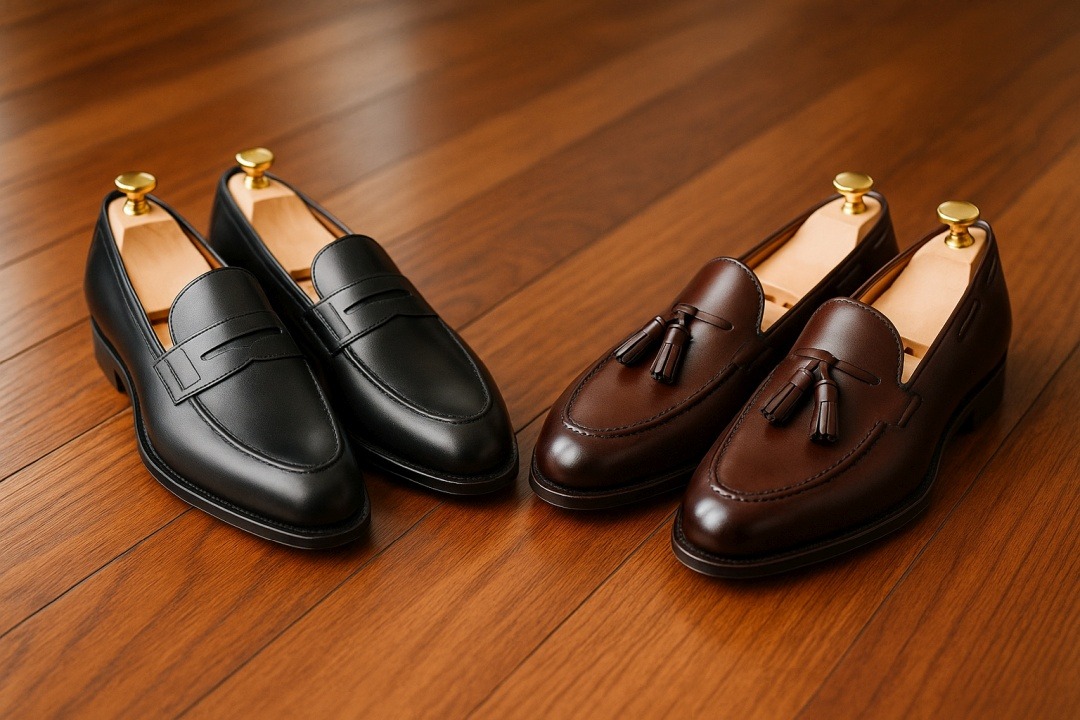
Men’s loafers come in many shapes, but the most useful pairs usually avoid extremes. A slim pair can look elegant, but too narrow may feel dated with modern pants. A chunky pair can look current, but too heavy may limit office wear. The best middle option has a clean shape, a sturdy sole, and enough weight to work with jeans.
Brown, burgundy, and black all serve different purposes. Black feels sharper and more urban. Brown feels warmer and more relaxed. Burgundy gives depth without looking loud. For most men, brown or burgundy often gets more wear because it pairs well with denim, khaki, navy, gray, and olive.
Comfort matters more than people admit. A loafer that slips at the heel or squeezes the toes will sit in the closet no matter how good it looks. Try them with the socks you plan to wear, walk on hard flooring, and check whether the upper creases comfortably. A shoe earns style points only after it survives real movement.
Women’s Loafers Need Shape, Weight, and Wardrobe Chemistry
Women’s loafers can shift an outfit in different directions depending on the design. A slim leather pair feels refined. A lug-sole pair feels stronger and more current. A soft suede pair feels relaxed. None is better by default; the right one depends on the clothes already hanging in your closet.
A woman who wears trousers, blazers, and straight jeans may get the most from a polished leather pair. Someone who wears long skirts, loose denim, and oversized sweaters may prefer a heavier sole for balance. A person who lives in warm states like Florida, Arizona, or Texas might choose a lighter color or softer finish because black leather can feel too heavy in bright weather.
The surprise is that the most useful loafer may not be the most classic one. A slightly thicker sole can make older wardrobe staples feel current again. That single design change can wake up jeans, coats, and dresses you already own, which is smarter than buying five new outfits.
Conclusion
The loafer’s rise is not about nostalgia winning again. It is about people wanting shoes that respect real life. Most Americans do not dress for one neat category anymore. They move between work, errands, family plans, casual dinners, travel days, and weekend routines, often without time to change the whole outfit.
That is why Penny Loafers feel so relevant now. They bring polish without pressure, history without costume, and comfort without surrendering style. The preppy past still gives them character, but the present gives them freedom.
The smartest move is to choose a pair that fits your actual wardrobe, not some fantasy version of how you think you should dress. Start with the pants, dresses, jackets, and jeans you already wear most. Then pick the loafer that makes those pieces look sharper with less effort. Your best shoes should not demand a new identity; they should make your own style easier to trust.
Frequently Asked Questions
Are penny loafers still in style for everyday outfits?
Yes, they are still in style because they fit the way people dress now. They look polished with workwear, relaxed with denim, and smart with casual weekend outfits. Their value comes from range, not trend hype.
How do you style loafers without looking too preppy?
Pair them with one relaxed or modern piece, such as loose jeans, a boxy jacket, a plain tee, or a casual dress. That breaks the old prep-school feeling while keeping the shoe’s clean, polished effect.
Can men wear loafers with jeans casually?
Yes, men can wear loafers with jeans as long as the jeans have a clean shape. Straight-leg, slim-straight, or relaxed denim works well. Avoid jeans that bunch heavily over the shoe because that hides the loafer’s shape.
Are women’s loafers comfortable enough for daily wear?
Many women’s loafers are comfortable for daily wear when the fit is right. Look for a stable heel, enough toe room, and leather or suede that softens with use. A padded insole can help if you walk often.
What color loafers are easiest to wear?
Brown, black, and burgundy are the easiest colors to wear. Brown feels relaxed, black looks sharper, and burgundy adds depth without being flashy. Your best choice depends on whether your wardrobe leans warm, cool, casual, or polished.
Should loafers be worn with socks or no socks?
Both options work. Socks make the outfit feel more styled and can add contrast, while no-show socks create a cleaner warm-weather look. Bare feet inside leather shoes can cause discomfort, odor, and wear, so no-show socks are often smarter.
Can loafers work in a business casual office?
Loafers work well in most business casual offices because they sit between dress shoes and sneakers. They pair easily with chinos, trousers, skirts, blouses, polos, and button-down shirts while still looking neat enough for meetings.
What pants look best with classic loafers?
Straight-leg jeans, cropped trousers, chinos, wide-leg pants, and tailored ankle pants all work well. The key is showing enough of the shoe. Pants that drag over the loafer can make the outfit look heavy and unfinished.